
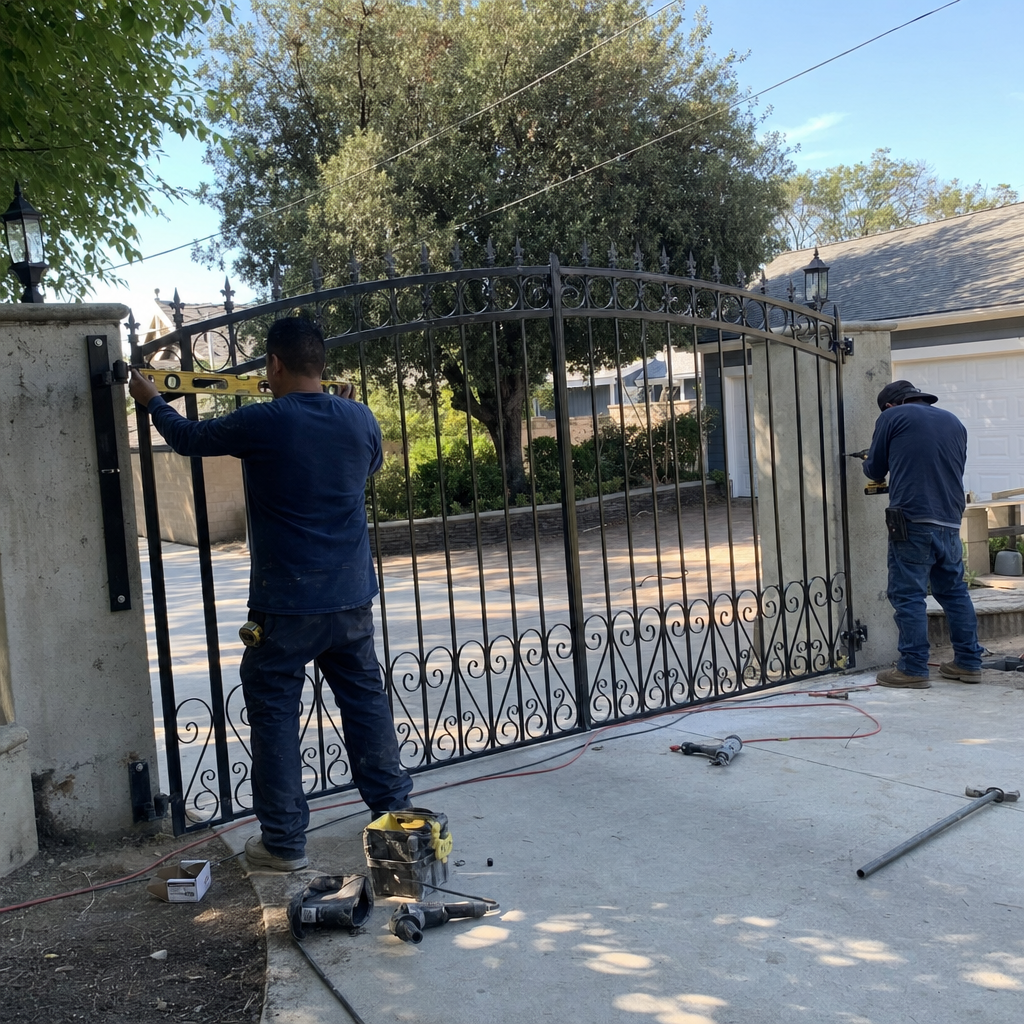
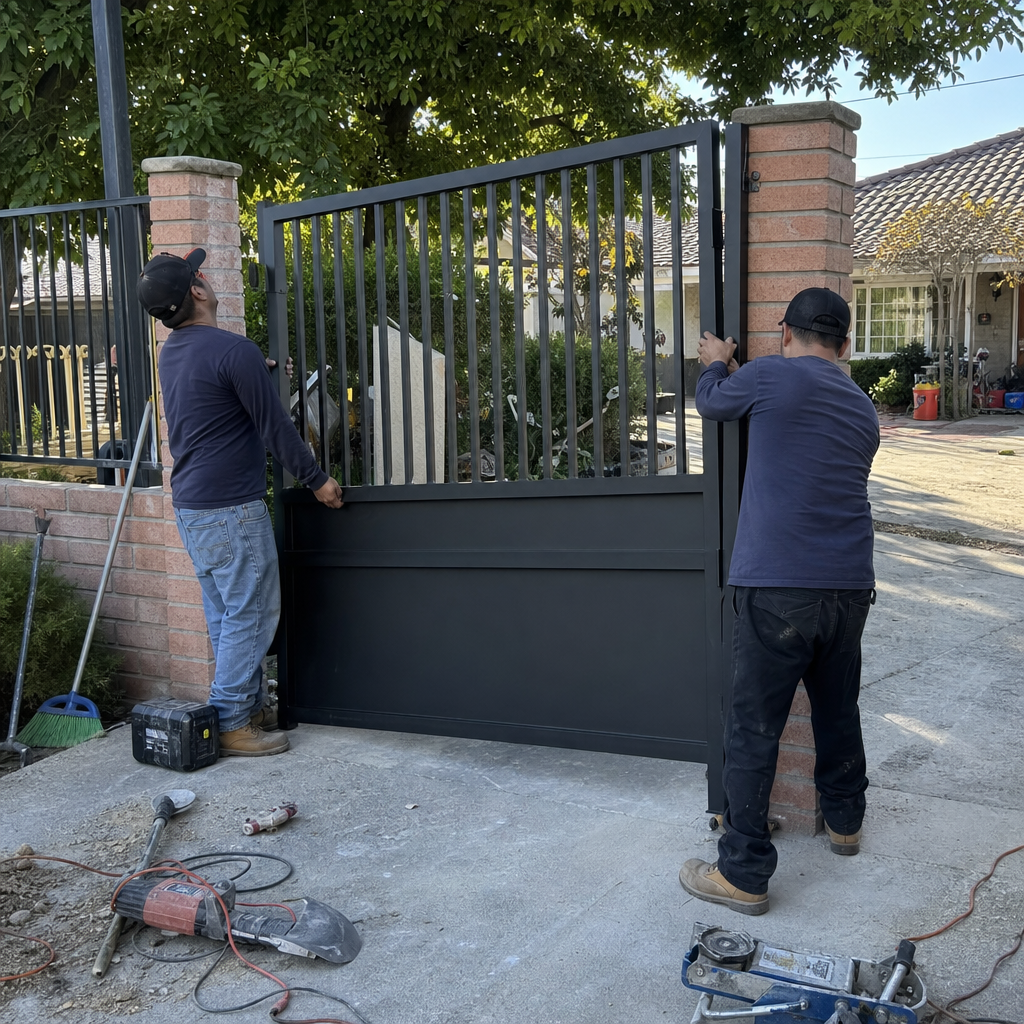
Fast, Reliable Gate Installation Across Citrus
If you’re in Citrus and you need a new gate installed — or you’re replacing hardware that was already aging when the Berlin Wall came down — you’ve found the right company. Apex Gate Repair Services Glendora has been doing gate work exclusively for 23 years, and we know the foothill-edge conditions in the 91702 ZIP code well enough to know that a standard installation spec simply won’t cut it here. Call us at (562) 378-6866 and we’ll come out to your property, assess the soil, the existing structure, and the wind exposure, and give you a straight answer on what the job actually requires.
Why Apex Gate Repair Services Glendora Is Citrus’s Preferred Gate Installation Company
Our Gate Installation team has been serving the foothill communities of the San Gabriel Valley for over two decades, and Citrus is one of the areas where we work most consistently — partly because the local conditions generate more installation failures than most homeowners expect. Jonathan Wright, our owner and lead technician, has personally handled dozens of gate projects in Citrus on properties along Grand Avenue and East Foothill Boulevard, and he understands the combination of decomposed-granite soil, intense inland heat, and Santa Ana wind events that other gate companies — particularly those dispatching rotating crews who cover a dozen trades — simply don’t factor into their specs.
514 customers have left us verified reviews averaging 4.9 stars. That’s not a few hand-picked testimonials — it’s a consistent record built one job at a time. When Jonathan shows up at your Citrus property, you’re getting the most experienced person we have, because he’s the one doing the work.
What happens when you call
- 1
A real person answersNo phone trees — you reach a local pro.
- 2
You get an upfront price rangeHonest numbers before anyone is dispatched.
- 3
A background-checked tech heads outLicensed & insured, dispatched right away.
- 4
You approve before work beginsNothing starts until you say go.
Our Gate Installation Services in Citrus
Driveway Gate Installation
Citrus lots — particularly those on the north side of Arrow Highway and up toward the mountain-facing roads — run significantly larger than what you’d find in denser San Gabriel Valley cities to the west. That means longer driveway spans, heavier gate leaves, and automatic openers that carry a bigger load daily. We size every driveway gate installation in Citrus for that real-world load, including selecting operators rated for the gate weight rather than the minimum residential spec. A properly sized driveway gate in Citrus, installed with the right post depth for the local soil, should run 15 to 20 years without structural issues.
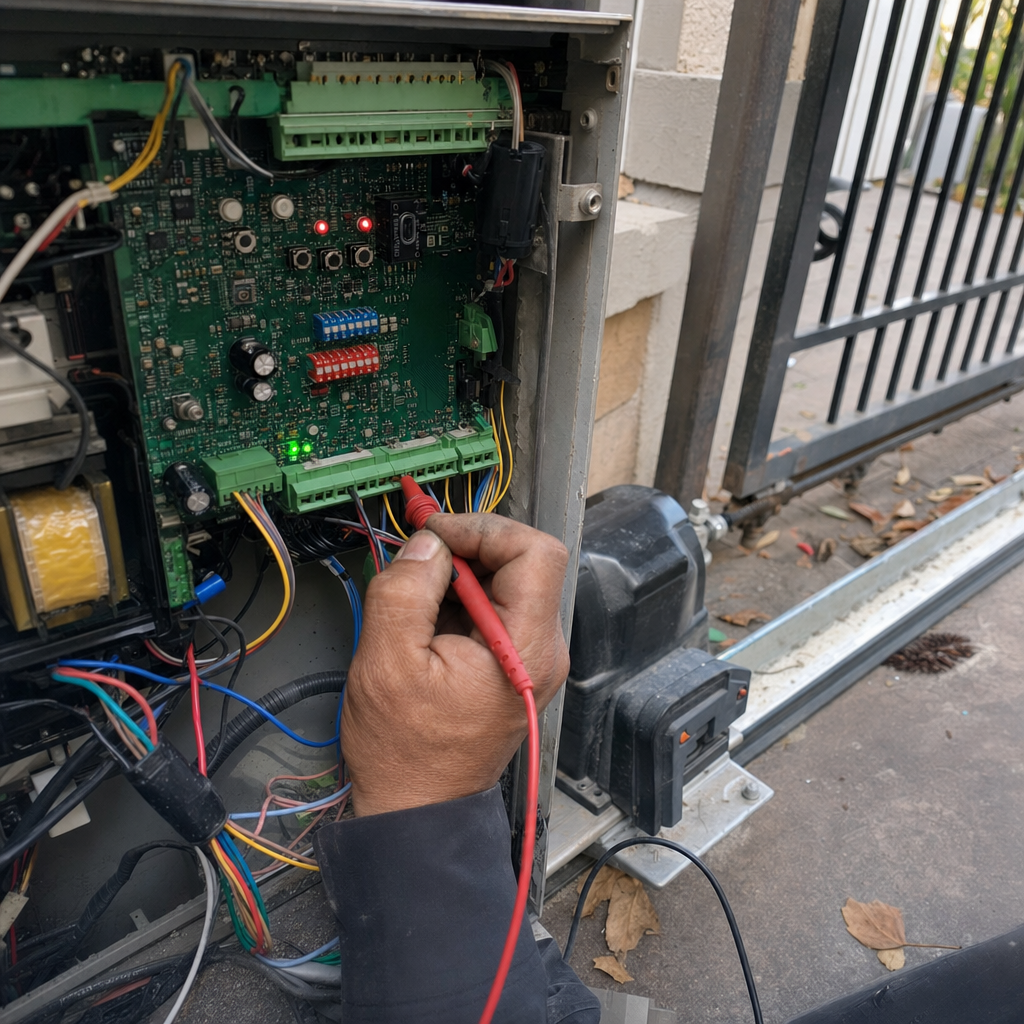
Pedestrian Gate Installation
Pedestrian gates on Citrus properties are often an afterthought tacked onto aging CMU block perimeter walls that were built in the 1960s and 70s. The problem is that those walls have settled, and attaching a new pedestrian gate to a post anchored in settled, sandy decomposed-granite soil without re-pouring the footing is a short path to a gate that won’t latch within a season. We assess the existing post and wall condition before every pedestrian gate installation in Citrus, and we’ll tell you plainly whether the existing anchor is adequate or needs to come out and be reset.
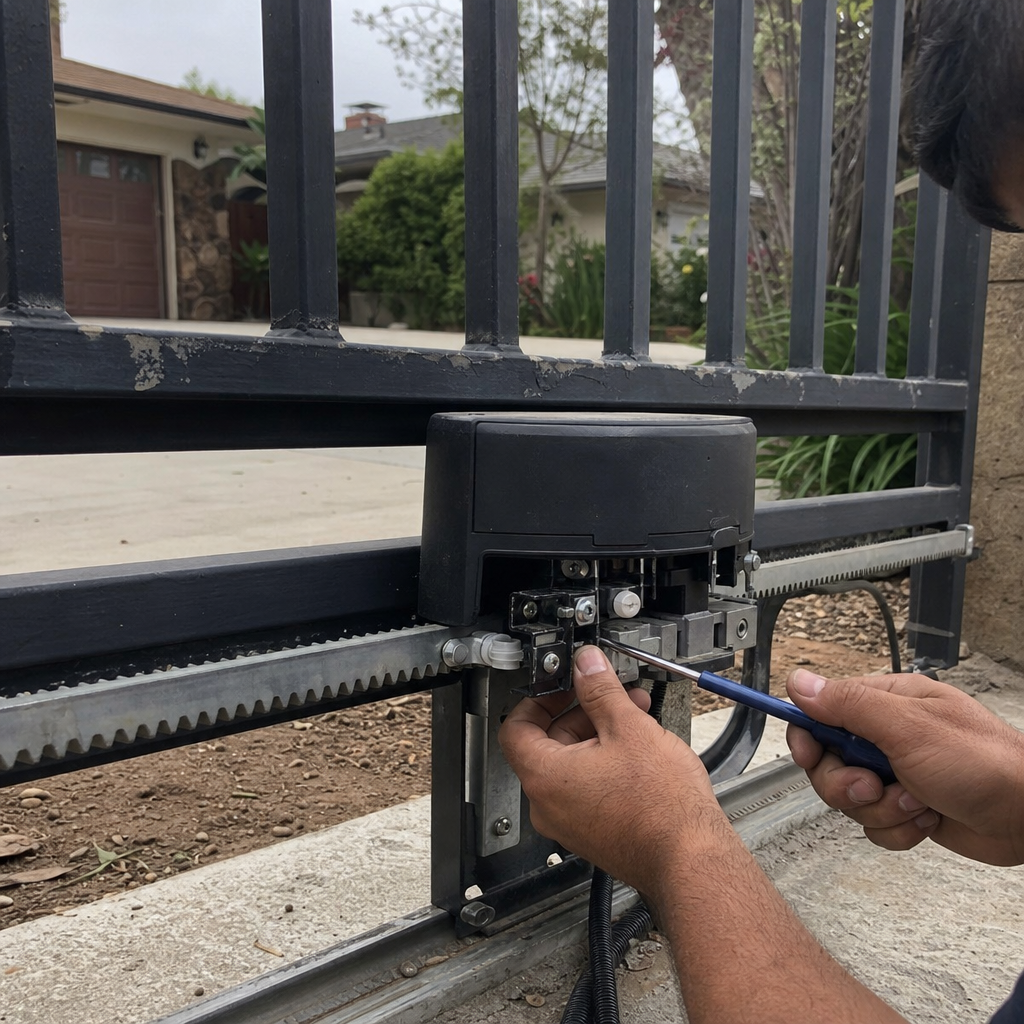
Sliding Gate Installation
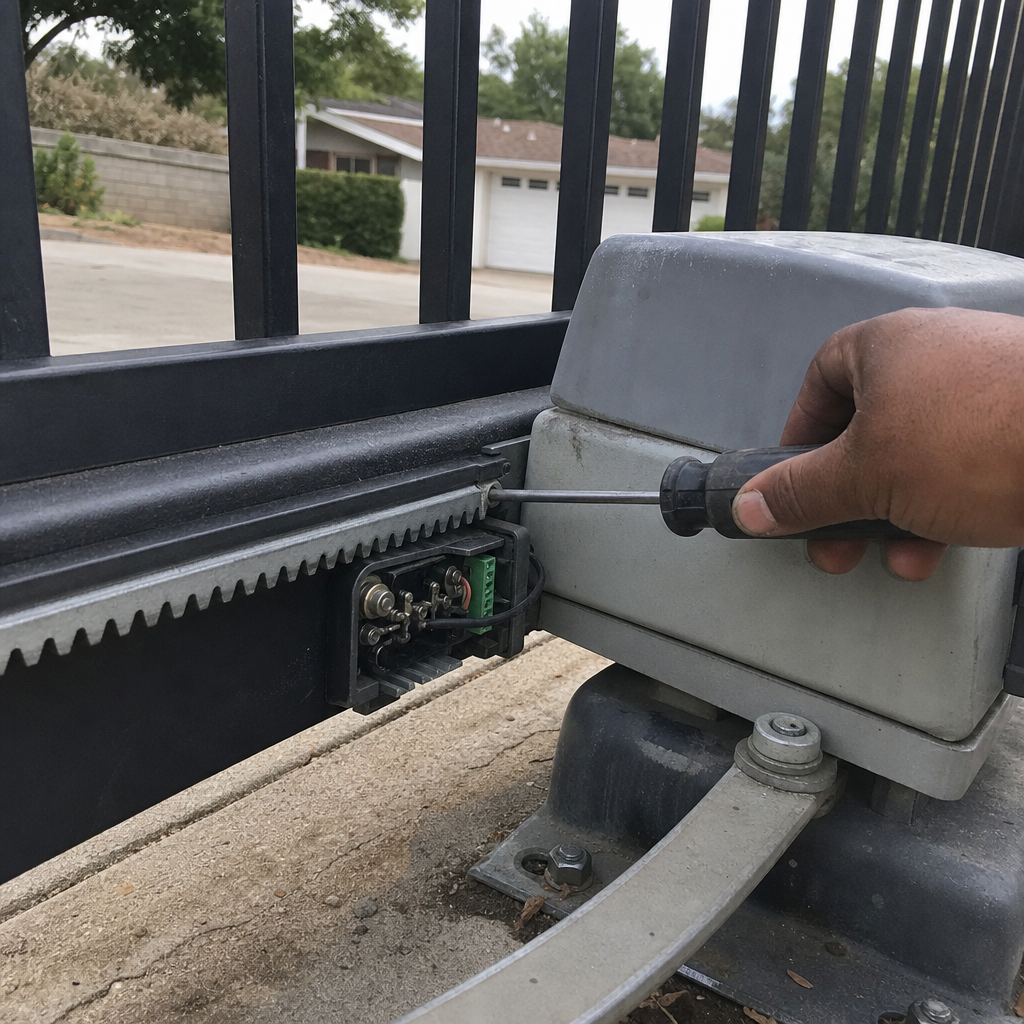
Sliding gates are worth a serious look on Citrus properties where the driveway grade or available swing arc makes a swing gate impractical — and there are more of those lots here than you’d think, given the varied terrain along the foothill edge. A sliding gate also presents less wind surface area during a Santa Ana event, which reduces the lateral load on the post and track hardware. We install sliding gate systems on both residential and light commercial properties throughout Citrus, with track and hardware sized for the gate weight and the local gust exposure.
Swing Gate Installation
Swing gates are the most common gate type on Citrus’s post-WWII ranch-style properties, and they’re also the gate type most vulnerable to the local conditions. A single-leaf or double swing gate acts like a sail in a Santa Ana wind event. That’s not a metaphor — it’s a physics problem that directly determines how deep the post footing needs to go and how the hinge welds need to be sized. On a Citrus swing gate installation, we spec the footing depth and base plate for the decomposed-granite soil conditions before we quote the hardware. That’s not extra caution; it’s what the site requires.
Trusted Brands We Service in Citrus
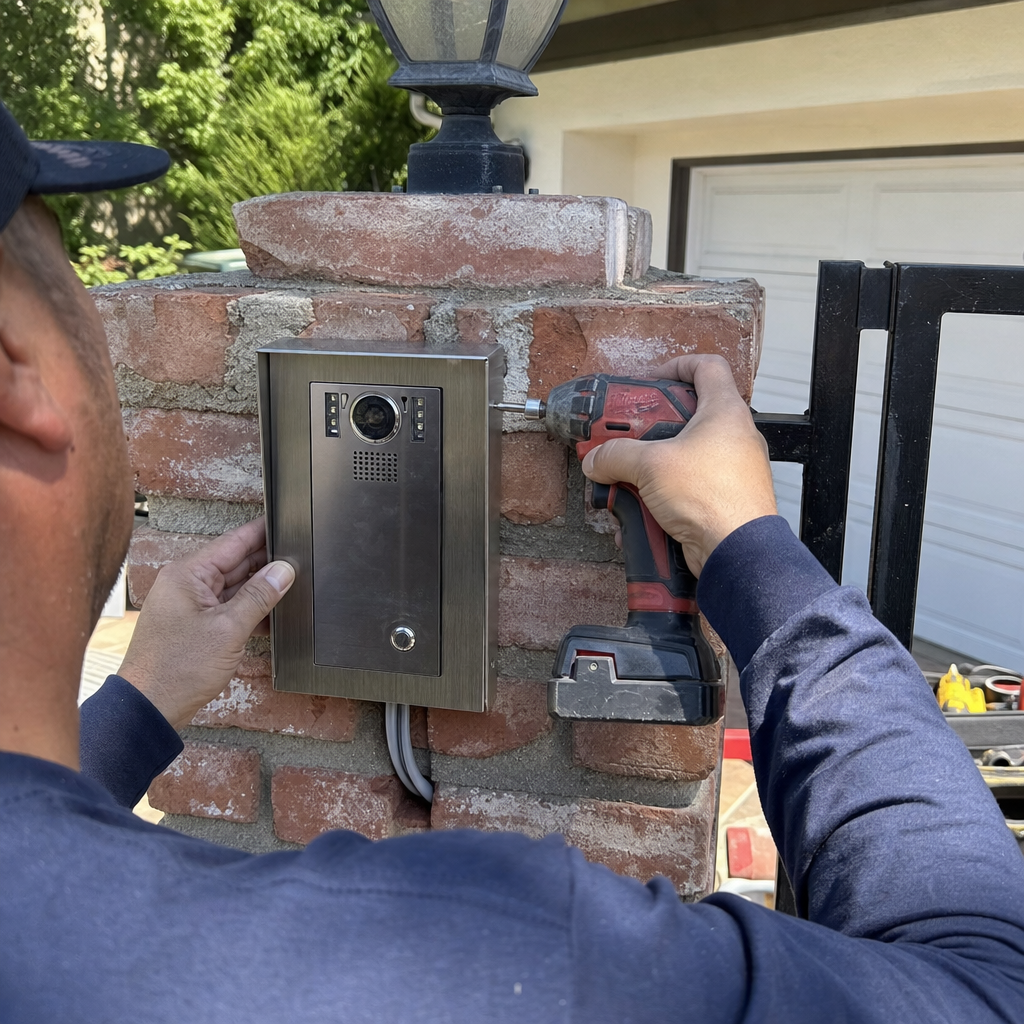
For swing and double gate applications in Citrus, we frequently install and configure FAAC operators, which carry a strong track record in high-cycle and wind-exposed environments — exactly what the foothill edge demands. For properties where a lighter-duty automatic system fits the use case, Ghost Controls solar-powered operators are a practical option on larger Citrus lots where running conduit to the gate is cost-prohibitive. We stock parts for both, which means we’re not waiting on a distributor when a warranty service call comes up. We’re also authorized to work on Viking and Linear systems, so if you have existing hardware from a prior installation, we service what’s there rather than pushing you toward a replacement you may not need.
The Citrus Installation Problem No One Talks About: Decomposed-Granite Soil and Wind-Load Specs
This is the thing that separates a gate that lasts from one that fails in the first two winters. In Citrus, the decomposed-granite soil prevalent along the foothill edge near West Alosta Avenue and North Sunset Avenue allows tubular steel swing-gate posts to rock and tilt under Santa Ana wind loads — a soil behavior that would be almost irrelevant just a few miles south in the flat communities along the 10 freeway, where the soil profile is entirely different. That rocking and tilting is the primary reason legacy 1970s–80s posts installed during the original tract buildout are now visibly out of plumb even before the gate hardware itself has failed. It’s also why new gate operators installed on existing posts without first checking plumb will burn out motors within months: the operator fights a leaning frame on every cycle until the thermal overload trips and eventually the motor dies.
The fix is not complicated, but it has to be done at installation. Deeper concrete footings — we typically go 12 to 18 inches deeper in Citrus’s foothill-edge soil than we’d spec in a flatland community — combined with oversized base plates that distribute the load across a wider bearing area, turn a structurally marginal post into one that handles sustained gust loading without deflecting. This is not optional on a Citrus swing gate installation. It’s the difference between a 20-year gate and a 3-year warranty call.
We saw this play out directly on a ranch-style property on West Alosta Avenue where the original single-leaf tubular steel swing gate — installed during the 1980s tract buildout — had its hinge post knocked nearly three degrees off plumb after a hard Santa Ana wind event. The aging LiftMaster swing operator was stalling and tripping its thermal overload on every cycle, fighting the misalignment. We pulled the operator, re-set the CMU block post in fresh concrete with an oversized anchor plate sized for the decomposed-granite soil, and installed a new FAAC swing operator rated for the heavier replacement gate leaf. Clean limit-switch calibration from day one. The burn-out cycle was gone entirely.
Common Gate Installation Problems We See in Citrus Homes
- Posts installed without plumb verification in decomposed-granite soil. New gate operators mounted on existing posts that have already tilted under prior wind loads burn out motors fast — sometimes within a single season. In Citrus, we check every vertical hinge post for plumb before touching the operator, because the sandy soil near the mountain base allows post movement that flatland techs rarely encounter at the same frequency.
- Powder-coat finishes that fail in inland-valley heat. Summer temperatures in Citrus regularly top 105°F, and standard residential powder coatings degrade in as little as two to three inland-valley summers at that intensity. Bare steel shows up fast after that, and rust follows. We specify UV-stable industrial-grade coatings on every tubular steel gate we install here — it’s not an upgrade, it’s the baseline spec for this climate.
- Undersized hinges on heavy-leaf swing gates. On properties along North Sunset Avenue and West Alosta Avenue, larger lots mean longer, heavier gate leaves. Standard residential hinge sizing fails at the weld under repeated Santa Ana gust loading that a typical flatland installation would never experience. We size hinges and welds for the actual leaf weight and the wind exposure — not the residential minimum.
- Aging 1970s–80s hardware still in service past its rated life. A large share of Citrus properties still have original tubular steel swing gates installed during tract buildout — hardware that was never rated for this microclimate’s lateral wind loads and is now 40 to 50 years old. Retrofitting a new automatic operator onto a gate frame in that condition without a structural assessment first is a setup for premature failure. We assess the existing metalwork honestly and tell you what can be salvaged and what needs to be replaced.
Pricing for Gate Installation in Citrus, CA
Here are realistic ranges for gate installation in the Citrus market, based on current labor and materials in the 91702 area:
- Single swing gate (manual, tubular steel): $1,200–$2,400, depending on gate width and post conditions
- Single swing gate with automatic operator: $2,800–$4,500, including FAAC or Ghost Controls operator, wiring, and limit-switch calibration
- Double swing gate with automatic operator: $4,200–$7,000, depending on leaf span, hinge sizing, and footing requirements
- Sliding gate installation (residential): $3,500–$6,500, including track, hardware, and operator
- Pedestrian gate (manual): $700–$1,500
- Security gate with access control: $5,500–$10,000+, depending on access control type and gate configuration
- Additional footing work (Citrus-specific DG soil): Add $300–$800 per post when deeper footings and oversized base plates are required
The footing line item is worth noting specifically for Citrus: it’s a real cost that doesn’t appear on quotes from companies who don’t understand the local soil conditions. We’d rather price it upfront than have you call us back in 18 months with a burned-out motor. Call (562) 378-6866 for a free on-site estimate — we’ll give you a written number, not a range.
We Also Serve Cities Near Citrus
Apex Gate Repair Services Glendora covers the full foothill corridor surrounding Citrus. We regularly serve Azusa to the west, Glendora to the east (our primary base of operations), Covina to the south, and Vincent in the canyon areas to the north. If your property is anywhere in this corridor, we can reach you fast and we know the local conditions.
Serving Citrus, CA — Our Local Coverage Area
We’re based in the Citrus area and know this community well. Use the map below to see our service coverage — if you’re nearby, we can almost certainly help.
FAQs — Gate Installation in Citrus
The decomposed-granite soil along Citrus’s foothill edge — common near West Alosta Avenue and North Sunset Avenue — has significantly less bearing strength than the compacted alluvial soils found in flatland communities farther south. Under Santa Ana wind loads, a standard-depth footing in this soil allows post movement that throws the gate out of alignment and forces the automatic operator to work against a leaning frame, burning out the motor. We typically go 12–18 inches deeper per post in Citrus than we’d spec in a lower-elevation community, and we add oversized base plates to distribute the load. It’s a one-time cost that prevents repeated motor failures. Call (562) 378-6866 if you want us to assess your specific site.
Possibly, but you need a plumb check and a soil assessment first — not an assumption. A CMU wall that looks sound may have posts that have already shifted in the decomposed-granite soil under decades of wind loading. Even a degree or two of lean translates into motor stall and thermal overload trips once an automatic operator is added. We check every existing post for plumb before recommending whether to reuse or reset it. In many cases on Citrus’s older properties, resetting the post in fresh concrete with an updated anchor plate costs $300–$800 and saves the entire operator installation from failing prematurely.
For Citrus’s combination of 105°F+ summer temperatures and high-cycle swing gate use, FAAC operators consistently perform well — they’re rated for demanding duty cycles and the thermal management is solid. Ghost Controls is a reliable choice for lighter-use swing gates on larger Citrus lots where solar power is practical and the cycle count is lower. We stock parts for both locally, so service calls don’t wait on shipping. We’re also authorized on Viking and Linear systems if you have existing hardware you want to build on. Call (562) 378-6866 and we’ll match the operator to your actual gate weight and cycle requirements.
A sliding gate is often the smarter choice on longer Citrus driveways, for two reasons. First, a sliding gate presents far less wind surface area during a Santa Ana event, reducing the lateral stress on posts and hardware. Second, on a long driveway with a significant cross-slope, a swing gate may not have adequate clear arc to open fully without grading work. That said, swing gates remain common and practical on flat, wide lots in Citrus — the key is specifying the right footing depth and hinge sizing for the leaf weight. We’ll walk you through the site geometry and give you an honest comparison.
Santa Ana events funnel accelerated gusts down through the San Gabriel Mountain canyon corridors directly into Citrus’s foothill-edge neighborhoods — this is measurably different from what communities a few miles south along the 10 freeway experience. A new swing gate acts as a wind sail, and if the hinge post isn’t anchored deep enough in the local decomposed-granite soil, that force transfers directly into post tilt and frame deflection. The mitigation happens at installation: deeper footings, oversized base plates, heavier hinge sizing matched to the leaf span, and UV-stable coatings that won’t degrade under the thermal stress that comes with every wind event. None of this is exotic — it’s just the correct spec for this microclimate, applied from the start rather than retrofitted after the first failure.
Written by Jonathan Wright, Owner at Apex Gate Repair Services Glendora, serving Citrus since the early 2000s.